
HIGGS · CSU #25 · AUTHORED ARTICLE
From “trust us” to “see for yourself”
Transparency practices that build trust and protect an organisation.
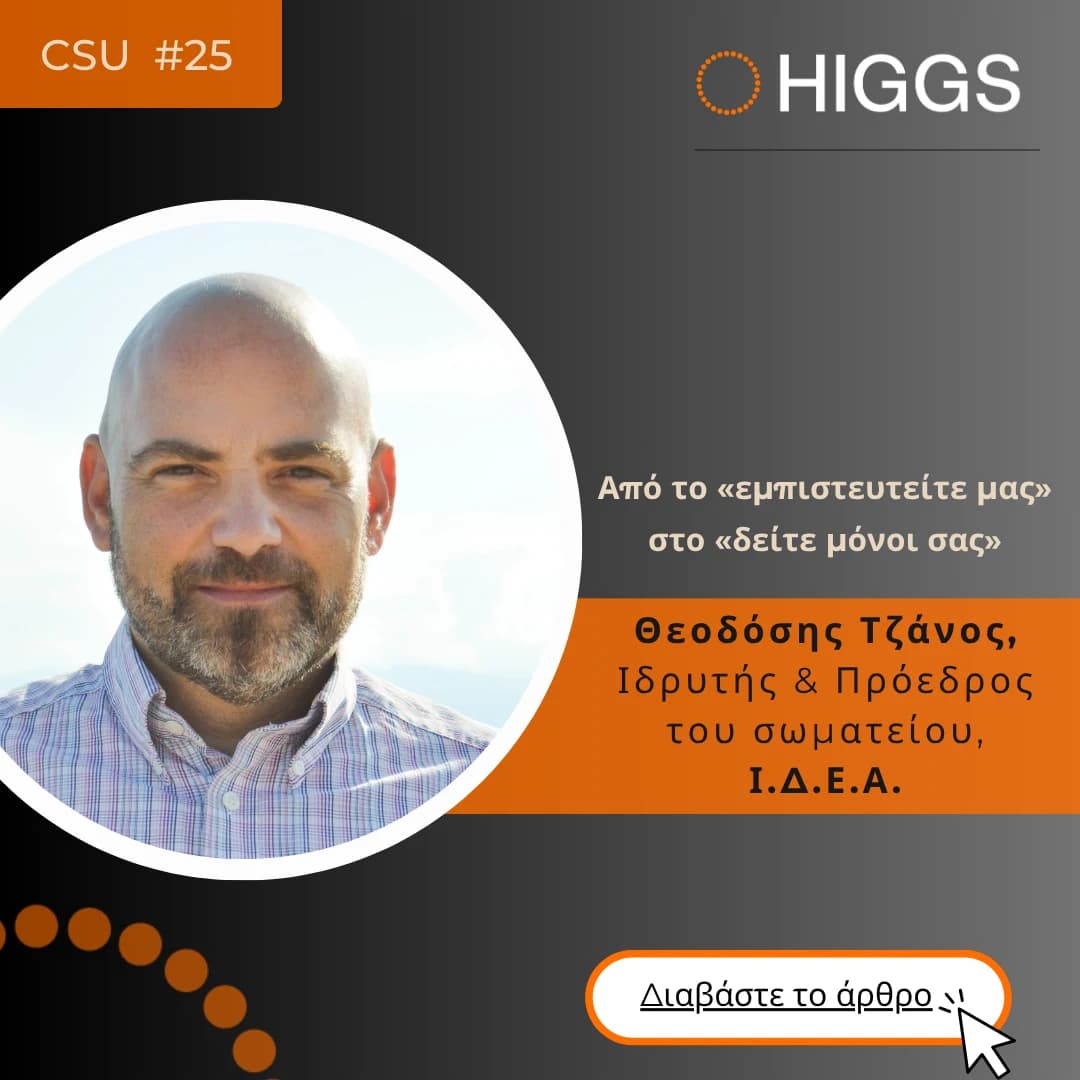
Theodosis Tzanos, Founder and President of IDEA
“How do I know where my money will go?”
In 2006, I worked for a large NGO for four months. I stood in central squares in Athens, inviting passers-by to support its work with five euros a month. I spoke with more than a thousand people. Two answers came up again and again: “I don’t have time to help” and “I don’t trust NGOs.”
Those conversations became the starting point for designing IDEA. How do we make civic participation easier? How do we give people practical reasons to trust an organisation?
After more than 500 actions in Greece and abroad, and twenty years of personal experience, we are still learning. But we have seen that trust grows stronger when people understand how we work, can see where their contributions go and can take a meaningful part.
Give people access to information: transparency in 15 minutes
An organisation asking for financial support needs to show how it manages its resources. A first step: open your organisation’s online banking, save screenshots of account activity and balances, redact third parties’ personal data and publish the images with a date and a short explanation.
That is what we do at IDEA. People can see the state of our bank accounts and ask us about what they see. The message is simple: our finances also concern the people who support us.
Fifteen minutes do not cover an organisation’s entire accountability process. But they are enough to start a habit. From there, each transaction can be linked to an explanation of the expense, the relevant action and its supporting document.
The test is whether someone can follow how resources are used without personally knowing the president or treasurer. The easier it is to understand how the organisation works and uses its resources, the less trust has to depend on personal assurances.
Show what became of each contribution: one action, one file
The person who gave twenty euros and the person who gave an afternoon share a need: to find out whether their help made a difference.
At IDEA, we chose to report on each action separately, without waiting for an annual or six-monthly report. We record in detail what each person contributes: time, money, materials or knowledge. We share the information promptly, while the experience is still fresh for the volunteer or supporter. We have found that recognising every contribution strengthens people’s relationship with the organisation and their willingness to keep taking part.
One practical solution is an “action file”: a shared record answering five questions. Why is the action happening? Who is taking responsibility for it? What did it need? What did we achieve? Where can someone check what we are presenting?
The file opens before the action and is filled with its budget, contributions, decisions, supporting documents and photographs. At the end, we add a short report, even if the result was not what we expected.
Trust grows through participation
To contribute, people need to know where they can be useful. A clear invitation to give two hours of volunteer work, cover a specific financial need or put their knowledge to use makes that first step easier.
It is just as important for them to know how they can take a greater part: suggest improvements, share in decisions or organise initiatives of their own. When the procedures are clear and support is available, people feel that the organisation offers them a meaningful role.
That opportunity strengthens trust and the willingness to contribute. People see that their opinions are heard and that they can influence the organisation’s direction. At the same time, they gain knowledge, experience and confidence, allowing them to take on more responsibility gradually.
Transparency also protects the people within the organisation
In IDEA’s early years, our Facebook group’s wall was our main communication tool. We had agreed that discussions about our actions would take place on the group’s shared wall, rather than in private messages. We discussed things and disagreed there, sometimes strongly. It was not always pleasant. But it proved useful.
When there were different versions of an agreement, we could return to the discussion. When misunderstandings or unfounded claims arose, we had evidence with which to respond.
Transparency does not prevent every instance of slander. But it allows an organisation to defend its work with evidence. It also makes the terms of working together clear. We have seen people leave because open accountability did not suit them. But we have seen the overwhelming majority seek and enjoy the trust that develops when everyone has access to information about their shared work.
When we make a mistake ourselves, we need to say so: what happened, who it affected and what we are correcting. A timely explanation limits rumours.
Recording all this information takes extra work, but it has saved us far more time and effort than trying to prove afterwards what happened. The trust built this way allows people within the organisation to focus on their work, without being consumed by suspicion, behind-the-scenes discussions and personal conflicts that a lack of transparency encourages.
Five simple steps to earn trust
- Share your financial picture, with bank-account information, explanations and protection of personal data.
- Offer specific ways to take part, from a small contribution to leading an initiative.
- Record and recognise every contribution, connecting it to the result.
- Listen and respond, with clear responsibilities and recorded decisions.
- Report on each action, presenting results, difficulties and corrections.
At IDEA, we are turning this experience into a system that automates much of the record-keeping and connects actions, contributions, responsibilities and financial information. We want to make it easier for people to work together and support those who undertake community work. We are open to working with both organisations and individual citizens who want to test, use and improve the model with us.
An organisation earns trust when people can see and check how their contributions were used, without needing specialist knowledge.
Transparency builds bridges of trust around the world, giving people the power to put their ideas into action and donors the opportunity to see what changes because of their contributions.